Wednesday, December 15, 2010

I Love a Good Fight

When I first saw the trailer for The Fighter, the latest collaboration between principal actor and Boston native Mark Wahlberg and director David O. Russell, my first thought was that it didn't seem like a traditional Rocky retread. While certainly hailing from the same genre of "based on a true story" that has littered Wahlberg's career - films such as Perfect Storm, Invincible, and Rock Star - it felt different than what you might expect from those similar titles. This was thanks in part to the local (Lowell, Massachusetts) scenery and gritty, generally dark atmosphere. But the film's biggest coup was probably the performers that flanked Wahlberg in the credits, namely excellent performers Christian Bale and Amy Adams. Lending their talents to Wahlberg's strong showing made the film look like one that could be contending for awards at year's end, and made for one of this year's most anticipated releases.

Yes, let's take boxing lessons from the lightest weight in the room
The Fighter is the story of real-life boxer "Irish" Micky Ward (Wahlberg), who grew up in Lowell in the shadow of his older brother Dicky. Dicky Eklund (Bale) was once a boxer known as "The Pride of Lowell" and whose crowning achievement - and the family's glory - was facing Sugar Ray Robinson and knocking him down in the ring, though he actually lost the match. These days Dicky has degenerated into a crack addict, though he does care about his brother and has trained Micky as a boxer, using everything he has learned. Managed by his hard-nosed mother Alice (Melissa Leo) and supported by his bartender girlfriend Charlene (Amy Adams), Micky rebounds from early disappointments, both in his sport and his family relations, to become a respected boxer and eventually en route to an epic championship match.

Okay, so I put extra caffeine in Four Loko... so what?
Though the film took a long time to put together, it seems to have benefited from the extended production time. Since 2003, the film has seen such names as Martin Scorsese, Darren Aronofsky, Brad Pitt and Matt Damon identified with it, but the film doesn't suffer for not having them in the final product. Russell does a great job of establishing locations and shots that can be recognized by the audience at a glance, and manages to get the proper mood of the working class Lowell neighborhood. There's not a lot that's pretty about Lowell, not in it's streets or it's people, and the beauty that Russell manages to convey is in all things subjective to its surroundings. The well-crafted storyline that the film possesses weaves its tale through the people portrayed and their personalities, and not just in the film's major events.

Marky Mark's family scared Adams juuuust a little...
That those people are also such great artists is no small feat either. As the film's lead, Wahlberg does a tremendous job playing the film's blue collar boxer, though truth be told it's hardly a stretch for him. He does immerse himself in the role, however, going so far as to not use a stunt double for his boxing scenes and working out for almost four years leading up to the role to achieve the proper body type. He probably won't win an Oscar for his work (Colin Firth and Ryan Gosling and perhaps even Stephen Dorff will be the likely front-runners in that race) but he certainly has earned at least a dark horse run at the prize, as his commitment to the role cannot be overstated. Bale's addition to the cast is an even bigger reason the film works so perfectly. As the drug-addicted older brother, Bale had to lose a lot of weight for the role, which he's done before, but that's not the reason he's amazing. He effortlessly takes on a Boston accent, but not the standard "pahk ya cah" that so many people initially think of for the region. He comes off as a veteran boxer who knows what he's talking about, and a drug-addled punk who doesn't commit a lot of time to his family or his problems. The reason Bale is so great is that he doesn't merely play the part well. For the purposes of the film he BECOMES Dicky, through and through. It's the kind of performance that makes careers.

Huh, what?? WOAH!!
It's great that in a Hollywood where strong female roles are few and far between you can see two great such roles in this film. Amy Adams, best known for happy, carefree characters plays amazingly against type here as Charlene, a bartender and Wahlberg's romantic interest. Charlene made mistakes early in her life and is trying to make up for them by supporting Micky in his rise to stardom. And Oscar-nominated Melissa Leo is amazing as Micky's churlish mother and manager Alice, who has a cruel tongue but holds family as most important. Both have already been nominated for Golden Globes thanks to their accurate, amazing characters and if either are left out at the Academy Awards it will be well and truly a snub, as the pair are the heart of this film.

Okay, look. It's called "shampoo." Use it once in a while!
The film has a few small issues, mainly pertaining to its boxing scenes. While comparisons to Rocky aren't unjustified, there are no fewer than five different boxing matches referenced in the film, and while a few are focused on, many of those bits are truncated to the point that the viewer would be unable to differentiate between them were it not for the interjecting story scenes. Also, the fights that Ward are best known for, those with Canadian boxer Arturo Gatti, don't take place until after the film's conclusion.  Still, the boxing scenes are well choreographed and researched, and with the exception of the silly close-up camera angles that muddy up some of the shots, are well done. Again, Wahlberg's decision not to use a stunt double makes the scenes more realistic when you can clearly see it's him hitting and getting hit. The film is helped by the fact that there is no true "bad guy" in the film. Sure, Dicky's addiction and Alice's crassness don't help matters, but the villains in this film are much more ingrained in the culture and biases within which the characters exist. Again, a great choice by the director to not artificially install a bad guy to make things more interesting.

Remember, when he hits you in the head, just fall down and curl up. We'll be home by dinner.
Though in the end it does get to be a little schmaltzy and not a little predictable, The Fighter doesn't disappoint as it was easily one of the best films I've seen this year. All the performers deserve credit for their accomplishment, as they were the ones that made it the amazing experience that it was. I was sure The Town was going to be the best locally based film of the year, but The Fighter made me change my mind, placing as the new #4 on my Top Ten. This was a love letter from Wahlberg not only to Micky and Dicky but also the city of Lowell, and if the film gets some awards this season, they will be wholly deserved.

Monday, December 13, 2010

Not Quite as Fabulous

You might remember me once or twice mentioning how my friend The Opinioness is the one who introduced me to a little show on HBO called Sex and the City. Granted, her main reason for doing so was because she wanted me to go see the midnight premiere of the first Sex and the City film with her, but because I had heard good things about the show (from The Opinioness, of course, but from other sources as well) and since I'm a relatively open-minded guy anyway, I took that challenge and watched six seasons of the ground-breaking show in about five weeks, barely finishing in time. My consensus? Despite some frivolous bits about ludicrously-expensive fashion, and some genuinely over the top scenarios, I enjoyed the vast majority of the show's episodes due to its emphases on friendship and human individuality. Despite Carrie Bradshaw and her friends' exquisite tastes, the characters still managed to be realistic people, with hopes and fears and people they could rely on. Even possessing a Y chromosome, I could appreciate the basic ideas the show conveyed, even if I'll never obtain a full understanding of womens' obsession with shoes. But the show wasn't designed for the straight male audience, as it was no surprise when the first film was released to huge audiences of mostly-female fans, many of whom identified themselves with one or more of the characters they had been introduced to back in 1998.

"Oh, no please don't let her talk to me..."
For me, there had been no rush to see the newest film in the SatC franchise, which was released this past May. Poor reviews deterred me, and frankly I thought the original run of the show and the first movie had done a good enough job of ending the series where it needed to be. Trailers for Sex and the City 2 featuring the ladies in the Middle East seemed like too out-there a scenario, though it promised to be a back-to-roots movement from the first film, which had more gut churning moments than many SEASONS of the show. Instead, the film's opener is entirely light-hearted, as the ladies and their respective families attend the Connecticut wedding of two SatC regulars, Stanford Blatch (Willie Garson) and Anthony Maratino (Mario Cantone). That's right folks, it's a gay wedding, complete with swans and officiated by Liza Minnelli. In the meantime, we get an idea of the issues the four women will be going through this episode film. Miranda (Cynthia Nixon) has a new boss at her law firm who hates her, and and she never gets to be at the big moments for her son. Samantha (Kim Cattrall) is worried about aging and menopause and takes tons of pills, creams and hormones to trick her body into thinking it's younger. Charlotte's (Kristin Davis) children are getting too much for her to handle. On top of that (and thanks to a comment by Samantha), she's now worried about the effect her no-bra wearing nanny will have on her marriage. And Carrie (Sarah Jessica Parker) is struggling with concept of her and Big (Chris Noth) becoming a complacent married couple, two years after their marriage.

Fashion is subjective as always, but still
For the first half of the film, it plays out much like an episode of the series, which is more than welcome. Splitting time equally between the four main characters, the film captures what was so great about the original series, bantering between sweet friendship and crass sexual display. These are more mature women than premiered twelve years ago, so the sex has been tampered down (with the exception of Samantha, who is as dirty as ever), but the other storytelling aspects from the show are on display and in top form. Witty dialogue, realistic relationships and plain honest heart abound, and if the rest of the film had felt even a shadow of what was put in the first half, I would have had very little to complain about. However, it is exactly for the film's second half that the story isn't nearly as good as it could be. Transported to Abu Dhabi thanks to a Samantha business trip, the four women must deal with their problems waiting for them back in New York City from far, far away. It is in this beautiful land that the main issues in the film arise, most notably the region's cultural suppression of women. Despite being labeled the "New Middle East", there are still extremely conservative viewpoints towards womens' rights that the film occasionally touches on, especially how it affects Samantha's open sexuality. The others are more respectful of the local customs, though each has their own situations to overcome that will test them and their relationships back home.

Yes, a picnic in the dessert, which is nothing like Central Park
The main reason people watch this film is for the characters, and the fab four are as great as they ever were. After so many years, the characters have matured but stayed true to themselves through relationships, families and more. Parker is as playful as ever as the film's lead, Carrie Bradshaw. Always seeking the next diversion, Carrie works to the bone on her relationship with her husband, so that they will always have the "sparkle". Cattrell is thankfully foul-mouthed as ever as the openly-sexual public relations agent Samantha Jones. Still as arrogant and uncompromising as ever, Samantha will nevertheless do anything for her friends. Her arrogance does however get her in more trouble than she is used to, and she also isn't as sympathetic since she's condemning local traditions while engaging in that attitude. Kristin Davis' Charlotte is more or less the same as she is every time we see her, with her neurotic personality often times overpowering her ability to think logically. For that she is paired effectively with Cynthia Nixon's Miranda, who shows a new, fun side in this film and does a great job taking charge and leading the characters to a good time on their trip. The four, even after so much time, work amazingly together, and their interaction with one another make the film as good as it is.

There's a hump joke in here somewhere
But one thing I was disappointed by was the lack of the original series' supporting characters. Though the men of Sex and the City make their relegated appearances, they are quickly cast to the wind come the film's second half. Evan Handler, who plays Charlotte's husband Harry, is one of my favorite characters from the show but has precious little to do here. The same can be said for Jason Lewis as Smith Jerrod, Samantha's Hollywood actor ex, who appears in all of two scenes. Miranda's husband Steve, played by David Eigenberg, has a few nice lines early in the film and then disappears. Garson and Cantone's gay couple disappear after the opening sequence, despite being among the show's more popular characters. At least a proper explanation is given as to why they ended up marrying one another after not liking the other one iota during the series' run. The charming Chris Noth is given the most to do as Carrie's husband Big (yes, his name is John, but he'll always be Big to me), though most of it is still in the film's first half. At least he's given some second half time, though not enough to get anything real before the film's end. The film is helped by a couple of new characters, however. Alice Eve plays Charlotte's Irish nanny quite well in the few scenes she's plugged into, and the bridge between her obvious brains and charm and her also obvious physical attributes make it much easier to imagine Charlotte's internal conflict. And English actor Raza Jaffrey is simply lovely as a butler working at the ladies' Abu Dhabi hotel. Carrie's Ex Aiden (John Corbett) also makes an appearance, but I didn't like this new Aiden storyline, as it was one that should have been put to bed years ago.

Samantha thankfully refuses to be anyone but herself
I don't want to give the impression that I hated the film's second half. It's just that the first half was so good, and the rest felt like a major letdown. There is one scene between Charlotte and Miranda equating motherhood to a full time job which is an amazing scene, probably my favorite from the film, while also saluting mothers around the world. And any scene with Jaffrey was great to watch. Sadly, these were small parts of a much larger story that was disappointing at times and racially charged in others. One scene featuring Samantha going ballistic in a bazaar is not a little culturally insensitive, and while it's supposed to be propping women up as strong, it really only inflames the American/Muslim divide. For the most part, the film's second half really is about allowing the ladies to embrace extravagances the same way they would have in New York, all while in a new glamorous place. While that's not as deep as it gets, it's obvious writer/director Michael Patrick King didn't think the same old crises would work in a traditional setting, but this might have been too big a leap for him. King might have been the best creative mind the original series had, but here he seems to lose his focus and the film just doesn't feel the same without its recognizable supporting cast.

The sets are gorgeous, and like Skittles, all the colors of the rainbow
If I had been judging this film based on the second half alone, it would be an easy pick for one of the year's worst films. Despite a few good scenes, the film wouldn't be watchable without the strong first half to balance it out. And the bloated run time of 146 minutes just stretched those bad parts out far too long to be palatable. I had no problem with the characters, only how some were used. It's racial themes were obviously over King's head, as he only focused on how the local Abu Dhabi culture affected the ladies' stay. Even a nice show of female solidarity between the four heroines and a local women's book club can't save the film from itself. Trying something different should be commended, but when you do the same thing in a new place you're just screaming that you have nothing left. There's no doubt that future SatC films would be extremely lucrative, but it's obvious the creative minds aren't crossing the Atlantic; they're merely treading water. Twelve years later, we've seen probably everything we could see when it comes to the Sex and the City franchise, and it's time to put the story out to pasture. Like getting blood from a stone, we'd only be looking forward to disappointment otherwise.

Thankfully, Sex and the City: The Musical hasn't panned out

Friday, December 10, 2010

Ninjas... Damn

Okay, having to wait for the good stuff to come out gets a little desperate sometimes. Deciding to go see a film in the theaters and then having to choose between The Warrior's Way and Faster just doesn't seem right somehow. The former is the premier film by writer/director Sngmoo Lee about a ninja assassin hiding out in an old west town, the latter another action film starring Dwayne Johnson and Billy Bob Thornton, who seemingly became persona non grata in Hollywood following his breakup from Angelina Jolie. And so, deciding that the first at least seemed somewhat original, I decided to haul myself across frozen rivers in hopes that I wasn't wasting my time.

Really, does sword-slashing really ever get old?
Despite what you might at first think, The Warrior's Way is not a martial arts film. Not really. Beginning perhaps with the multiple-award winning film I'm sure most have seen, Crouching Tiger Hidden Dragon, many Asian films that have made their way over the States have been over-the-top theatrical fantasy dramas, complete with impossible visuals and high-wire acts. In the early days of martial arts films, the story mainly evolved around people beating one another up, but what was so amazing about it was that the stars were their own stunt men, and many of the tricks pulled off were done solely by the performer, with little in the way of Hollywood trickery to make things appear more amazing than they really were. It simply wasn't needed. Now, while films like Ong Bak still portray martial artists as the ultimate stuntmen, many of the films coming overseas would kill to be the next Crouching Tiger or Jet Li's Hero, but the schtick is overdone now. While some, like Shaolin Soccer or Kung Fu Hustle have been better and done well overall, eventually you get to the point where you have to scream "Enough already!". Of course, The Warrior's Way isn't even an Asian-produced film. It was made in Auckland, New Zealand and funded by Barrie Osborne, who produced the Lord of the Rings films. So it's not really a martial arts movie. It's not even originally produced anywhere in Asia. It's about 90% English spoken, and has ridiculous visuals on top to boot. Oh boy, this should be fun.

Two of the biggest reasons not to see this movie
The film introduces us to Yang (Korean star Jang Dong-gun), the strongest assassin and greatest swordsman in the known world. Yang is a bad-ass cold-blooded killer with AWESOME flowing locks, tasked with the mission of killing every member of a rival clan. He's finally gotten to the end, his final enemy, killed their bodyguards, and just earned his new rep as greatest swordsman, but when his final target, a baby, inadvertently giggles, Yang has a change of heart, and decides to leave his homeland with the baby and search out an old friend who has immigrated to the USA's old west. And so Yang is hunted by his former clan, only to find that the town his friend has relocated to isn't much better.

Prepare for a fight-scene letdown
Early on, the real star of this film is the baby. Continuing what has become a new trend in Hollywood, The Warrior's Way has a baby that half the time steals the scene she happens to be in. In one scene, Yang kills an assassin who had attempted to get him to drop his guard. No sooner has the body hit the floor than the baby turns her head and gives Yang a look of "WTF!" Perfect. In these early scenes, seeing the baby do little things like this, or even watching Yang carry the baby by the scruff of its collar is amusing in it's own way. The child simply seemed to display the perfect attitude towards each scene, making the film to this point feel more authentic. Unfortunately, this is only for the first third of the film. After that, for whatever reason, the baby becomes much less important as secondary characters take more time away from young April. It's too bad, as from these early experiences I had hoped the film would have a story akin to that of the classic manga Lone Wolf and Cub.

Maybe they should have done this BEFORE she was cast
It's these secondary characters who make the film drag and feel somewhat less of what could have been. Geoffrey Rush is very good and at first almost unrecognizable as the town drunk, Ron. Good for a laugh at the beginning, Rush uses his ability to chew his way though any amount of scenery to make the most of his appearance here. And later, when he's required to be a bit more serious, he steps up to that plate as well. In short, Rush did amazing work to whatever was asked of him. The same cannot be said for Kate Bosworth as Lynne, a knife thrower with a tragic past. Even if I could get past the fact that Lynne was an uninteresting character to begin with, and that Bosworth's energy and spunk get tiring five minutes after we meet her, I simply can't get past the accent. For some reason she adopted what sounded to me to be an Alabama accent (For the old west? Really?), and the effect is annoying, atrocious, asinine, and that's just covering the A's. That she's out-acted by the baby (Analin Rudd) is telling. Tony Cox plays the mayor of this town of broken people - settlers who used to run a traveling circus - and for those who have pleasant memories of his role as the diminutive bad-guy in Bad Santa, good news! His performance level hasn't changed since 2003. At least Danny Huston is somewhat interesting as the evil character known as "The Colonel", a Civil War vet (I assume from the uniform) with a Phantom of the Opera vibe going who raids the small town with his army of brigands and pretty much has his way with the people and locale. Huston conveys evil well here, making him a compelling villain. Less so is Hong Kong actor Ti Lung as the master of Yang's former clan, who eventually hunts his former student down. This isn't really because of Lung's performance, though performing in English rather than an Asian dialect does make the film seem like it's truly geared towards the cinema buff who can't be bothered to read subtitles. Frankly, not enough is done with the part, even through a few flashbacks, to convey why he's so evil in Yang's mind. Okay, except for the whole baby-killing thing.

You tell 'em, drunken Geoffrey Rush!
The best part is actually played by the film's lead (What a concept!). Dong-gun, whose films Friend and Taegukgi: The Brotherhood of War have shattered Korean box office records, is more than just good looks. He carries himself with a confidence that reminds me of a young Chow Yun-fat and his performance holds many subtleties that draw us in and keep us fixated on him. Silly special effects notwithstanding, we get the real idea of him as a character adjusting to his new, peaceful life, with not a little bit of culture shock and a few adjustments to be made. Like the baby, his best scenes are early on, and make me wish again the film had been more about the two of them on the road and avoided the whole remote town idea altogether.

This doesn't look better on screen, trust me
The visuals are at once pretty and distracting, as our eyes are drawn to the shiny and colorful backgrounds of overly-rendered green screen backdrops. The problem is that we're supposed to be paying attention to the people on the screen, and too often are the backgrounds far more interesting. Some, like the cherry blossoms blowing in the wind of the opening scene, are absolutely gorgeous, and it's a shame that the quality varies so much over the course of the film. I think I would have appreciated more gritty, less colorful views of the world, like those of this year's Book of Eli. The digital quality was somewhat lacking as well. The few explosions are pretty, but one scene involving the bad guys climbing a half-built Ferris wheel simply LOOKS like digitally-rendered characters climbing a digitally-rendered wheel. It looks cheap on the big screen, and probably should have undergone a few tweaks before it was added to the film reel. Fight scenes are mostly uninspired, with most action being quick, unseen, and unrealistic, partly the silliness of the genre, and partly because they didn't have an actual martial artist in the lead role.

Bringing a gun to a knife fight... such lack of class!
When we get down to it, The Warrior's Way is not a good movie. Some redeeming performances prevent it from being a BAD movie, but while it's probably been under-appreciated thus far, it's squarely in the middle and there just isn't much to recommend it.. Some script revisions wouldn't have hurt, as the story simply didn't work as is, and Bosworth was simply the wrong actress cast for her role. Part of me wanted to like this film, and I certainly don't regret seeing Dong-gun in action. I might check out the international section of the nearby rental shop and see if I can find any of his earlier works. But that's not enough to say you should see this film, especially now that with awards season underway, there are at least a half dozen other films you should be seeing instead.

Wednesday, December 8, 2010

It Can't Be Stopped!


What do you get when you cross one of America's greatest actors, one of it's up-and-coming stars, and a runaway train? If you're director Tony Scott, the answer is Unstoppable, the "based on a true story" tale of two train engineers who take it upon themselves to try and stop an unmanned train that presents a danger to the people along whose rail it runs. The film was inspired by the real-life CSX 8888 incident in which a runaway train carrying hazardous chemicals went rampant through the state of Ohio before finally being brought under control by CSX employees and local authorities. I won't lie, I wasn't entirely behind seeing this film. Besides the fact that the trailer made the film seem so over-the-top dramatic to the point of almost unwatchable, there had been other options out there that seemed far more palatable to my tastes than this. Finding myself out of those options for the first time in a while (and of course needing all the material I can get for three reviews a week) I decided that I liked Denzel Washington and Chris Pine enough (not to mention the foxy Rosario Dawson... Rawr) to slip into theaters unseen and catch this while it was available.

Wait... This isn't the set of Star Trek 2...
There's very little in the way of deep story here. Thanks to the ineptitude of train yard employees, a train trailed by rail cars measuring a half mile long gets loose and under power, entering the main line unmanned and becoming a danger to every community along the rail. Meanwhile, Will Colson (Chris Pine), a young train conductor, arrives at work and learns he's paired with veteran engineer Frank Barnes (Denzel Washington), with whom he's never worked before. After the beginnings of a rocky partnership, plus almost being crashed into by the runaway locomotive, the two team up on the crazy idea of running down and stopping this engine of death. Real deep, riveting stuff.

Washington gets paid big bucks to make you see films like this
Fortunately, the film is a lot more watchable than you might initially think. Yes, it does feature a train full of kids in danger, but those same kids - who the trailer would have you think are a major focal point of the film - are out of danger a mere quarter of the way through the film. So that's one major criticism avoided, as that aspect of the trailer was probably the most over-the-top storyline bit they could have introduced. The film is also compellingly watchable, and if that doesn't seem like the best of compliments, remember that it could have been MUCH worse. The sad truth is that Tony Scott manages to make two men chasing a runaway train in a single locomotive extremely entertaining, and even if it's not a perfect film it can easily be enjoyed by someone looking to just unwind and not think too much. Another good point is it's intelligence with train operation. The film often fills in what might be critics' complaints about the plot by explaining why a train's "dead man" switch doesn't trip or how a device called a "derailer" could fail to derail a sufficiently-laden train. While I should probably feel insulted that the film so openly explains tiny details as if I don't know how a train operates, the truth is that I - as well as most film-goers seeing this title - DON'T know how trains operate, and actually benefit from these open, simple explanations.

No trains were harmed in the making of this film
That said, the film does get a little out-of-hand starting at the mid-point of the tale, as the attempts by the railroad company to stop its runaway get more and more ridiculous. When it's finally Will and Frank's chance to do their part, it's almost a relief because it puts an end to the silliness that had come before. Characters are also pretty slim pickings, as they seem to be pulled from the cliche heap. Will is a husband and father who has found his way into the dog house and starts the film sleeping on his brother's couch. Frank is a father with a dead wife and two daughters, one of whom's birthday happens to be that very day and OF COURSE Frank forgot. It's stuff like this that reminds you that this is Tony Scott, the action-oriented younger brother of the more talented and varied filmmaker Ridley Scott. Tony doesn't DO high class drama, he's an all-American action boy. And he knows how to blow stuff up almost as well as Michael Bay.

The same can not be said, however, for train EMPLOYEES
The film's acting is fine, if not given much material to work with. Washington is getting a paycheck as Frank, whose idea it is to try and capture the train in the first place. This is a typical B-level Washington film, one of the dozens he has sprinkled throughout his career in between solitary drops of actual top-shelf quality film. One might say that he's limiting himself by appearing in so many low-brow releases that he might not be as well remembered after his career as some of his contemporaries, such as Tom Hanks. I however give him credit for doing his career his way and he'll be remembered as one of the most talented actors in Hollywood once his time in the spotlight comes to an end. Pine is obviously an up-and-comer whose big break-out, Star Trek, made him a world-wide phenomena. While not allowed to churn out his Jim  Kirk charm, Pine does a fine job as the young conductor simply trying to get by. Rosario Dawson is good as a train yardmaster who keeps tabs on the duo and helps them figure out what to do in order to stop the train. Once again, there's not a lot for her to do besides support the film's heroes while being angry at her higher-ups who consistently gunk up the works. Kevin Dunn plays the film's main human antagonist (because Scott believes that every film needs at least ONE), a corporate executive for the rail company that looks out more for the interests of the company than the people this train might harm. Ethan Suplee plays a train yard worker who instigates the whole mess. Suplee plays it like a semi-retarded manatee, which is pretty much his range. And Lew Temple plays his train welder as an unlikely secondary hero and is also a hick with a capital H.

Rawr
Though the film does exaggerate the events that actually occurred during the real event, there is nothing so out there as to be completely unbelievable, and Scott does a good job at making sure that your eyes watch the screen at all times. It was poorly advertised and looked much worse in the trailers than it did while sitting in on an actual screening, lending credence to the idea that seeing is believing. Unstoppable is a film that is much better than it deserves to be, but like brother Ridley's 2010 effort Robin Hood, is far from reaching the true potential set by its respective genre. The result is a film that, while overly-relying on fictional danger and poor character designs, manages to entertain through sheer simplicity. And who doesn't want to keep it simple once in a while?
"Warp factor 1, Sulu. Engage."

Monday, December 6, 2010

Roll Out the Black Carpet

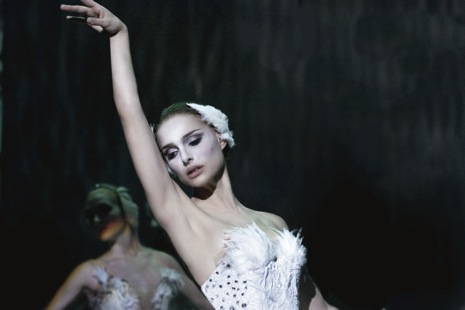
When your film opens the Venice Film Festival, it's kind of a big deal. When your film is chosen to open ahead of megastar George Clooney's film The American for that festival, it means something. When your film is on most critics' shortlist for Best Picture several months before it's even released to the general public, expectations are made. That's what it's been for me with The Black Swan, the latest film by Darren Aronofsky. The director, whose previous film The Wrestler was a critical darling and helped relaunch the career of Mickey Rourke (and was one of my favorite films that year), had originally thought of the two films in the same story, but decided to split them into two separate films when there proved to be too much for just one film. So The Wrestler focused on what many consider to be a low-class performance, while Black Swan did the same with what many consider to be a high art form, despite both being physically taxing and exhausting on their respective performers.

In Black Swan we meet ballerina Nina Sayers (Natalie Portman), a mid-career dancer who has never had a chance to be a star. Hoping the producer will feature her more this season, Nina tries out for the lead role of Swan Queen in the classic show Swan Lake. For the role, producer Thomas Leroy (Vincent Cassel) wants a dancer who can embody both the two distinct characters of the White and Black Swans. Like the White Swan, Nina is technically proficient and innocent, but the Black Swan is the manifestation of seduction, and Nina has a difficult time putting emotion and seduction into her dance. While fearing being replaced by the technically-awkward but graceful newcomer Lily (Mila Kunis), Nina's pursuit of perfection on the stage lead a whole new side of her to emerge, manifesting itself in shed skin and black feathers.

Like The Wrestler, the feeling of Black Swan is gritty and dark, a refreshingly ground-level look at the world of ballet, as dancers are constantly in danger of being replaced by younger, fresher variants and careers on stage end long before those of your average athlete. Nina is square in the middle of that conflict, young enough to hope for more focus and to replace the company's lead veteran (Winona Ryder) while old enough that the appearance of Lily has her metaphorically peeking over her shoulder. As a result, and in order to achieve the perfection she so craves, Nina's descent into darkness comes as no surprise. It's easy to see where Aronofsky was influenced by such films as All About Eve, in which a veteran actress is eventually replaced by a younger, energetic protegee, only for that young woman to undergo the same situation as soon as she's square in the spotlight. Comparisons to The Wrestler are of course expected, though the former focuses on recapturing old glory and redemption, whereas the lead in this film seeks "merely" to be perfect. And that is expressed perfectly every time Nina is shown stretching (in which we're shown ways in which the average American could never find themselves) and in dance, which always manages to look beautiful while apparently uncomfortable to the person performing.

Like Thomas thought of Nina, I knew Natalie Portman would do a good job of portraying the innocent, timid ballerina, but wondered how she would pull off having to be more emotional and seductive in her performance when the Black Swan took over. To my relief - and glee - Portman proved to be every bit the actress needed. Not only did her performance astound my senses as an innocent woman forced to adapt to survive her chosen profession, but her dance was also inspired. I'm not a ballet aficionado, but while I was pleasantly surprised - if somewhat bored -  with her ability early in the film, it couldn't hold a candle to a late-film performance in which the Black Swan has taken over, and I couldn't take my eyes off the screen. Cassel plays a theatre producer who uses sexuality to get his performers to create art, rather than just dance. Though Nina has the hots for him, he's hardly an attractive man. His charisma is undeniable however. In a scene in which he he seduces Nina, then walks off saying that was what he wanted in reverse was brilliant, one that exemplified all that was good and bad about the character. I'd never been particularly impressed with Mila Kunis in the past, but she puts on a great show as Lily, Nina's complete opposite. Playing the Anne Baxter to Nina's Bette Davis, Kunis does a great job as the seductress who might be after our hero's job.

The supporting cast is also strong in two small roles. Though the overbearing mother of a dancer is something of a cliched role, Barbara Hershey is perfect in this role. Technically, the elder Sayers never actively seems to push Nina in any direction, but her complete lack of respect for Nina's privacy among other things leads one to believe that Nina feels the pressure from her former dancing mother. Hershey plays well the role of supportive mother, though one perhaps a bit misguided. Winona Ryder plays Beth MacIntyre, the company's veteran dancer and former star who is being forced into retirement. Though she's Nina's idol, she feels the same of Nina as Nina feels towards Lily: unbridled fear of being replaced. Ryder is actually amazing in this small role, which doesn't see her much screen time but allows her to put all her emotion into a few brief scenes.

The film does have a few small problems, but the biggest is it's special effects budget. The film tries to show more than can be believably implemented in quick sequences, involving one scene with rapidly-growing feathers. Darkness helps these bits somewhat, but the cheapness of the effects is still a minor distraction. The timing of these effects however is actually much better, as the director shows a good eye towards making you think "did I just see that?" in an otherwise normal scene. Also, there's certain level of confusion towards the film's finale which doesn't feel fully believable. It's hard to explain, and it's only one bit, but still, a bit more exposition wouldn't have hurt there. The film also surprisingly has a sense of humor, which is certainly funny but at times detracts from the idea that this is a psychological horror film, and doesn't blend in as much. Still, when one character finds out that another had a sex dream about them, he cry to her retreating form "Was I good?" elicited chuckles from the packed theater I was in and does a good job of lifting the dark film's mood. And on a final note, Tchaikovsky's familiar melodies are still as lively and energetic as I remember from when I first heard them so long ago. Hearing the music is like being accompanied to the show by a familiar friend, and makes the experience much more enjoyable.

As I said at the beginning, when a movie like Black Swan garners so much early attention, expectations are made. Sometimes these expectations exceed the actual quality of the film, but in this case they don't. Black Swan was everything I expected and even threw a few surprise curves my way, making this a unique experience compared to anything I've seen this year, and it's portrayal of the dangers of seeking perfection is expertly told. With great performances, excellent mood, wonderful art and a truly shocking emotional transformation by the film's lead make Black Swan my new #1 film for 2010. But really, are we surprised?

Friday, December 3, 2010

Love and Lots of Sex


I'm not sure which surprised me more: Maggie Murdock (Anne Hathaway) exposing her boob less than five minutes after we meet her character in a doctor's office, or that Love & Other Drugs by it's finale had became one of my favorite films of the year. The romantic comedy by director Edward Zwick had drawn me in with a strong trailer and charismatic leads, and with most of the films I REALLY wanted to see unavailable to me or forthcoming, I decided to dedicate my time and money to this film, which if nothing else looked interesting and original.

Chinese food in bed is step #22 in Dating for Wimps
Loosely based on the book Hard Sell: The Evolution of a Viagra Salesman by Huffington Post blogger Jamie Reidy, Love takes place in the late 1990's and introduces to us salesman Jamie Randall (Jake Gyllenhaal), a college dropout working as a clerk at a small-time electronics store, where he has used his charm - especially with the ladies - to be the best salesman at the store. Fired shortly after the film's opening for engaging in sexual conquest with one of his fellow employees, Jamie gets help from his millionaire brother (Josh Gad) and is hired as a salesman for Pfizer, the commercial drug giant. Tasked with selling Zoloft and Zithromax in the Ohio River Valley, Jamie happens to meet Maggie, a free spirit who suffers from stage one Parkinson's Disease. She's the first woman who doesn't immediately fall for Jamie's charms, and what begins as a raunchy one night stand eventually changes for both of them, as both begin to experience love for the first time.

Quick! It's the 80's and you're Tom Cruise! Go!
Love & Other Drugs is only the second romantic comedy directed by Zwick, who's only other title from that genre is 1986's About Last Night. While his other efforts in the meantime have been more serious dramas such as Courage Under Fire, The Last Samurai, and Blood Diamond, the pacing in this film shows that he hasn't lost his touch in that area. The film flows at a good pace and never feels forced, allowing the story to be told to us at a comfortable level and never dropping things upon our heads that we wouldn't understand. As director and as one of the film's screenwriters, Zwick takes something that might not appeal to most audiences - mainly the operations of American pharmaceutical corporations - and manages to wrap a story around it that we can instantly connect with on an almost personal level. Not only that, but the film doesn't suffer from being aimed at teens or a younger audience. It's an adult romance, never overly smarmy or unbelievable in it's portrayal of a mature adult relationship.

Trying to avoid another "Brokeback" moment
Zwick is helped immensely by his leading actors. Hathaway is simply amazing, her performance subtle and emotional, a character who struggles to be independent even with the knowledge that a disease with no cure will slowly take he life and self-reliance away from her. It's easy to see why Jamie falls so easily for her, and why he would do anything for her. Don't mistake her for a damsel in distress however; she doesn't like the idea of being tied down, and falls in love on her own terms, not his. We knew Hathaway would be good, but Gyllenhaal is the surprise here. Though he tried before to cultivate a career of playing disturbed characters (Donnie Darko, Jarhead) or performing in serious drama (Brokeback Mountain, Zodiac), it was his charming role in the otherwise-repulsive Prince of Persia that I began to suspect his talents as a romantic leading man. The result is one of the best performances I've seen from him, that of the aimless guy who went for so many years simply getting by, only now learning what's important to him and how to care. The two actors have amazing chemistry, and I don't just mean in the bedroom. Every conversation we're witness to is an intellectual treat, as they all make us feel right there in the scene, intertwined in the elegance of speech and the occasional rampaging emotion. Both are so believable that you'd think the two actors were the ones in love, not just the characters.

If Anne Hathaway suddenly strips in your foyer, make sure you're the only one home
It's a shame the secondary characters aren't as enticing as the leads, but that might be asking too much. That isn't to say that the supporting cast is bad, quite the opposite in fact, simply that Hathaway and Gyllenhaal raise the bar far higher than any of the others can reach. Oliver Platt plays Jamie's veteran partner and mentor, training him in the hard art of the sell while aspiring to get the promotion to Chicago so he can be with his family again. For this, Platt puts on his usual scene chewing performance, the same one we've been privy to since forever. Gabriel Macht plays a drug representative from a rival firm with a romantic history with Maggie. There's really not much to say about him, as he loses precious screen time long before the final credits. He's solid when given the chance however. Josh Gad plays Jamie's brother, but his role is somewhat unrealistic and obviously plugged in as a cheap comedic role and a link to Jamie's family history. He works when he's used, and thankfully in small doses, but the idea that Jamie's millionaire brother ends up sleeping on his poorer sibling's couch for about two-thirds of the film does seem a bit unlikely, even if it is because Jamie is his big brother. The best of the group however might be Hank Azaria, who plays the top general practitioner in the region, Dr. Knight. Though he at first comes off as simply an asshole, Knight eventually reveals to us a side disenfranchised with the state of the medical industry, barred by red tape and constantly scrutinized by lawyers waiting for that one big mistake. It's by far the deepest character I've seen from Azaria, whose mostly comedic roles have been doubtlessly funny if a bit shallow.
Unhappy Anne makes us ALL sad...
There is a bit in the middle where we're reminded that the film has basis in real life. I had been wondering why the film used the real names of drug companies and drugs when the turning point of the film turned out to be the company's release of the sex drug Viagra. Suddenly stuff starts happening, and the impact of Viagra is obvious to anybody living today; it was the wonder drug that completely changed the industry, and to blanket that with a fake name would have reeked as obvious to anybody watching. Thankfully having this drug and it's parent company featured by name doesn't hurt the film in the slightest. Though it is portrayed that working in the drug industry is lucrative and the creation of Viagra is treated for the cultural event that it was, the film stops short of overly praising the company for being all-over wonderful. It also doesn't condemn the drug industry for its role in the highly profitable medical institution and the problems inherent there. Those things, the industry and the company and the product, simply are what they are. They don't detract from the romantic story attempting to be told, and that works out just fine.

"So... what do you want to do now?"

In the end, it really falls to the lead characters to make us feel like we're witnessing something different. Hathaway and Gyllenhaal make that happen in spades, and they are helped by a script that feels current, is funny as hell at times and emotionally gripping at others. Kudos to Zwick for successfully getting the best he could out this story, which could have simply taken the easy route and settled for middle of the road fare. Though it may alienate some audiences with its honest and intimate look at Parkinson's, I thought this was a beautiful film that had me constantly tearing up near the end and when the film came to a close, I wanted more, and in a good way. I never thought I'd do this, but I have to: Love & Other Drugs is my new #6 for the year. A romantic comedy that DOESN'T feature extensive video game references making it so high?

I must be maturing in my old age.

"Maybe next time we'll try in the bed."

Wednesday, December 1, 2010

Hex Doesn't Mark the Spot

Just when you think superhero movies are getting better and more sophisticated, Hollywood churns out something that makes you regret that thought. While there's no denying that the genre is seeing a resurgence, with special thanks to Christopher Nolan's Batman films and Jon Favreu's Iron Man, it's still one that can sink into miserable depths if not treated properly. Such is the case with Jonah Hex, a post-civil war antihero film based on the pseudo-popular character from the DC Comics line.

Malkovich proves he CAN be in bad movies
The film follows the trails of bounty hunter Hex (Josh Brolin), scarred by the branding iron of the Confederate officer who killed his family in cold blood, Quentin Turnbull (John Malkovich). Turnbull, thought to have died years ago, resurfaces to threaten the newly-recombined United States still sitting on the ashes of Civil War with an all-new super weapon, and the President hires Hex to track down and kill Turnbull. Jonah accepts, wanting to finish the business he never had a chance to so many years ago.

A face not even his mother would love
Seemingly everything you can do wrong with a movie like this was done wrong: wrong director, wrong actors, wrong soundtrack, bad screenplay, complete lack of respect for the source material, and mediocre special effects. Considering director Jimmy Hayward had no experience in this kind of film - his career prior to this title had mainly consisted of serving as an animator on children's CGI-animated movies - this probably should have come as a surprise to no one, especially the people who green-lighted $47 million to budget this flick. The screenplay by filmmakers Neveldine/Taylor (whose 2009 film Gamer I mostly enjoyed) is a mess, completely glossing over Hex's origin as unimportant while aimlessly shuffling from scene to scene for the first half until the main plot becomes obvious to everyone involved. It also relies too heavily on supernatural elements which either didn't exist or were of much less importance in the comics. What probably hurt the film most however was it's PG-13 rating, which muzzled what would have otherwise been a much more violent film, as befitting the character. While studios may hesitate at making superhero films too bloody, some licenses simply can't be marketed with a younger audience in mind. For every Superman, Green Lantern or Thor who can have stories told about them without being too adult, there is a Punisher, Elektra, Deadpool and, yes, Jonah Hex who simply don't work on that familial level.

"No, really... people aren't going to SEE this, are they?"
Where the actors are not all untalented, they are still largely miscast for this film. Brolin is probably the closest to a believable character in this cast, but one thinks he was chosen more for his rising star and recognizable name than for being right for the part. His role mainly consists of grunting and maintaining the same facial expression throughout the film, with nary an expressed emotion the entire time. I'm looking forward more to his role in the upcoming True Grit remake as a mark of his talent than this film, which simply doesn't let him do much. Malkovich is similarly wasted. Much better in this year's RED, the veteran doesn't get an opportunity to display his disarming charm or wit here, instead forced in an "evil for evil's sake" character as a Confederate officer trying to disable the United States by any means necessary. He's side-kicked by Michael Fassbender as a somewhat psychotic Irish brawler who took part in killing Hex's family. Fassbender, who I liked in Centurion, has an interesting part and does well, but is ultimately more talented than he is allowed to show. Still, his Riddler/Alex DeLarge-inspired role was one of the film's better ones. Revolutionary Road's Michael Shannon, Benny & Joon's Aiden Quinn and The Wire's Lance Reddick are talented performers who have little to do in this film. And Will Arnett should never be cast as anything other than a comedic role. You can tell how bad a film is going to be by how serious Arnett's role is, as it does in casting him as US soldier and useless character Lieutenant Grass. Finally, we have Megan Fox, who plays a whore who can't act... oh wait, that's just Fox being herself. While I don't think anyone can deny her obvious wiles, Fox is no new Jolie, and has no business acting in any capacity. It's only a matter of time before studios realize this and stop offering her roles, most likely at the earliest moment her exotic looks begin to wither and fade.

Who cares if she doesn't have any talent?
The soundtrack for Jonah Hex was scored by the metal band Mastadon. While the music was certainly entertaining on it's own, it completely mismatched the film's attempted atmosphere, which would have benefited from a more traditional western soundtrack, instead of the merely western-tinged metal that littered the film's scenes. It's merely another obvious mistake the filmmakers made putting this movie together, and detracts from what already feels like a rushed, aimless project.

Hex gets set to burn the script. They never needed one anyway!
It's obvious Jonah Hex is nowhere near the top of the list for best movie of the year. What should have been carefully cultivated to an adult audience since it was based on a mid-card comic book character was rushed and hacked out the door and marketed to a younger audience for no good reason except perhaps to try to get more people to see a crap movie. That much is easy to see. What is a more interesting question is whether the film is worse than the one I've been touting nearly all year as 2010's worst, Legion. As we get towards the end of the year, I'll be looking into what I think are the worst feature films of 2010, and putting it into a comprehensive top 10 list might get messy. If anyone wants to name a film for the list, I'll be accepting all recommendations. We're getting down to the wire, the final month of 2010, and lots of films that haven't been gotten to yet. I'm looking forward to finishing this year on a high note, sharing my every movie and game-related notes with you all.